


- WEBSITE -
 Current Location:HOME > PRODUCTS > Multi-span Film Greenhouse Series > Multi Span Sawtooth Greenhouse >
PRODUCT DETAILS
PRODUCTS DISCRIPT
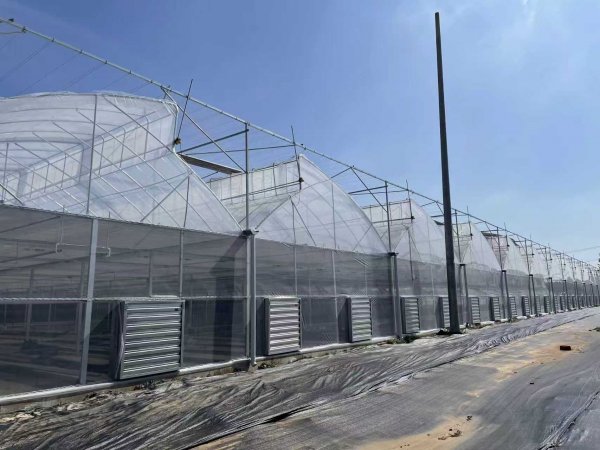
Sawtooth Greenhouse with Hydroponics in Senegal
Discover how multi-span sawtooth greenhouses combined with NFT, and Dutch bucket hydroponic systems can support commercial vegetable production in Senegal.......
 PRODUCT DETAILS
Multi-Span Sawtooth Greenhouse with Hydroponic System in Senegal: A Smart Solution for Modern Agriculture
Introduction
Agriculture plays a vital role in Senegal’s economy; however, commercial growers face numerous challenges, including high temperatures, intense solar radiation, seasonal rainfall, water supply issues, and the need for more efficient land use. As the demand for fresh vegetables continues to rise, modern greenhouse technology is becoming an increasingly popular solution among local agricultural investors and commercial growers. In 2025, we received an inquiry from a Canadian client looking to establish a 2,000-square-meter hydroponic greenhouse in Thiès, Senegal—his hometown. Based on his requirements and our extensive experience in West Africa, we recommended a 40×50-meter multi-span, sawtooth-style film greenhouse. The facility is designed for year-round cultivation of tomatoes, peppers, and lettuce. Taking into account the local climate and specific site conditions, we developed a comprehensive design that includes cooling systems, internal shading, hydroponic equipment (such as rectangular cultivation channels and Dutch buckets), as well as an integrated fertigation system and IoT-enabled automation. The facility is now operational.
1. Why Choose a Sawtooth Greenhouse for Senegal?
Senegal has a predominantly hot climate, with strong sunlight and distinct dry and rainy seasons. These environmental conditions require greenhouse structures with effective natural ventilation and reliable rainwater management.
The multi-span sawtooth greenhouse is particularly suitable for commercial vegetable production in tropical and subtropical regions.
Its distinctive roof design provides several advantages:
Natural Hot Air Exhaust
The elevated sawtooth roof openings allow hot air to escape through natural convection. This helps reduce heat accumulation inside the greenhouse, particularly during hot daytime conditions.
Improved Air Circulation
Combined with side ventilation systems, roof vents help promote continuous air exchange and improve the internal growing environment.
Better Rainwater Management
The sloped roof design facilitates rainwater drainage during the rainy season, reducing the risk of water accumulation on the greenhouse roof.
Suitable for Large-Scale Production
The multi-span structure provides a large continuous growing area, allowing growers to integrate hydroponic cultivation, irrigation systems, climate control equipment, and internal transportation facilities.
For Senegalese agricultural projects, the greenhouse can be customized according to local wind conditions, rainfall intensity, crop requirements, and available land.
2. Hydroponic Growing Systems for Commercial Vegetable Production
Hydroponics is an efficient cultivation method that allows plants to grow without traditional soil. Instead, crops receive water and essential nutrients through a precisely managed nutrient solution.
For commercial greenhouse projects in Senegal, different hydroponic systems can be selected according to crop types and production targets.
NFT Hydroponic System – Leafy Vegetables

NFT (Nutrient Film Technique) is suitable for lettuce, basil, and other leafy vegetables.
A thin layer of nutrient solution continuously flows through growing channels, supplying plant roots with water, nutrients, and oxygen.
Main advantages:
· Efficient water and nutrient utilization.
· High planting density.
· Clean and standardized vegetable production.
· Suitable for commercial leafy vegetable farms.
Dutch Bucket System – Fruiting Vegetables
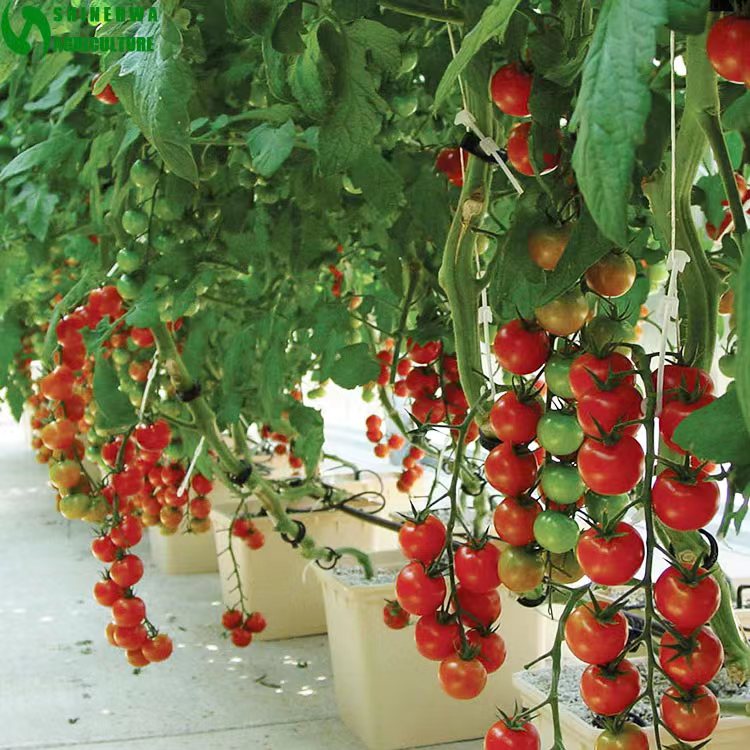
For tomatoes, cucumbers, peppers, and other fruiting vegetables, the Dutch bucket hydroponic system is a practical option.
Each plant grows in an individual bucket filled with a suitable growing medium, such as coco coir or perlite.
Main advantages:
· Suitable for long-cycle fruiting crops.
· Flexible irrigation and fertigation management.
· Good root-zone aeration.
· Convenient for commercial crop management.
3. Essential Greenhouse Equipment for Senegal's Climate
A successful greenhouse project requires more than just a steel structure and covering material. Environmental control equipment must be selected according to local climatic conditions.
For a commercial multi-span sawtooth greenhouse in Senegal, the following systems are worth considering.
Roof and Side Ventilation
Natural ventilation is one of the most important components. Properly designed roof vents and side openings help remove accumulated heat and improve air circulation.
Insect-Proof Netting
Insect nets help reduce the entry of common agricultural pests while maintaining ventilation. Mesh size should be selected according to local pest pressure and airflow requirements.
Shade Net System
External shading can reduce excessive solar radiation and help prevent heat stress during periods of intense sunlight.
Circulation Fans
Horizontal airflow fans help improve air movement, reduce temperature differences, and maintain a more uniform growing environment.
Drip Irrigation and Automatic Fertigation
An integrated irrigation and fertilizer injection system supplies crops with accurately controlled water and nutrients.
The system can include:
· Water storage tanks.
· Water filtration equipment.
· Fertilizer mixing tanks.
· Automatic dosing units.
· Drip irrigation lines.
· EC and pH monitoring equipment.
For locations with high temperatures and limited water resources, precise irrigation management is especially important.
4. Water Management: A Key Factor in Hydroponic Farming
Water quality is one of the most important considerations when developing hydroponic projects in Senegal.
Before selecting the irrigation and fertigation equipment, growers should conduct a water analysis to determine:
· Electrical conductivity (EC).
· pH level.
· Total dissolved solids (TDS).
· Sodium and chloride concentrations.
· Bicarbonate and other relevant mineral concentrations.
If the available water contains excessive salts or unwanted minerals, additional treatment such as reverse osmosis (RO) may be required.
A recirculating hydroponic system can also help improve water-use efficiency by collecting and treating drainage solution before reuse, where appropriate.
With proper filtration, nutrient management, and water monitoring, commercial growers can achieve more consistent production while reducing unnecessary water consumption.
5. Recommended Crops for a Commercial Hydroponic Greenhouse
A multi-span sawtooth greenhouse can support different commercial crops depending on market demand and environmental control capabilities.
Crop | Recommended System | Key Considerations |
Lettuce | NFT / DFT | Temperature management |
Tomato | Dutch Bucket | Ventilation and fertigation |
Cucumber | Dutch Bucket | Vertical trellising |
Sweet Pepper | Dutch Bucket | Climate and irrigation control |
Basil | NFT | Nutrient management |
For Senegal, lettuce and other leafy vegetables may target urban fresh-produce markets, while tomatoes, cucumbers, and peppers can serve supermarkets, restaurants, and commercial distributors.
Crop selection should be based on local market demand, production costs, water availability, and the greenhouse's actual climate-control capacity.
6. FZY – Integrated Greenhouse and Hydroponic Solutions
As a professional greenhouse manufacturer and agricultural engineering supplier, FZY provides integrated solutions for commercial greenhouse projects worldwide.
Our services cover the complete project process:
· Customized multi-span sawtooth greenhouse design.
· Hot-dip galvanized steel structures.
· Greenhouse covering materials.
· Roof and side ventilation systems.
· Shading and insect protection systems.
· NFT, DFT, and Dutch bucket hydroponic systems.
· Automatic irrigation and fertigation equipment.
· Environmental monitoring and control systems.
· Technical drawings, equipment supply, and installation guidance.
Every project is designed according to its specific location, climate conditions, crop requirements, and investment objectives.
Whether you are planning a commercial vegetable farm, a hydroponic greenhouse, or a large-scale agricultural development project in Senegal, FZY can help you develop a practical and integrated growing solution.
Conclusion
The combination of a multi-span sawtooth greenhouse and a hydroponic growing system provides a promising approach to modernizing commercial agriculture in Senegal.
By integrating effective natural ventilation, appropriate shading, efficient irrigation, and crop-specific hydroponic systems, growers can improve production management and make better use of available resources.
A successful greenhouse project starts with the right design.
Planning a Commercial Greenhouse Project in Senegal?
Send us your crop types, project area, and installation location. Our engineering team can help you develop a customized greenhouse and hydroponic solution for your agricultural project.

 2024-05-13


FZY Greenhouse | Commercial Greenhouse & Hydroponic Solutions
Copyright © 2024-2025 http://fzyagritech.com. All Rights Reserved FZY Greenhouse | Commercial Greenhouse & Hydroponic Solutions All Rights Reserved.


